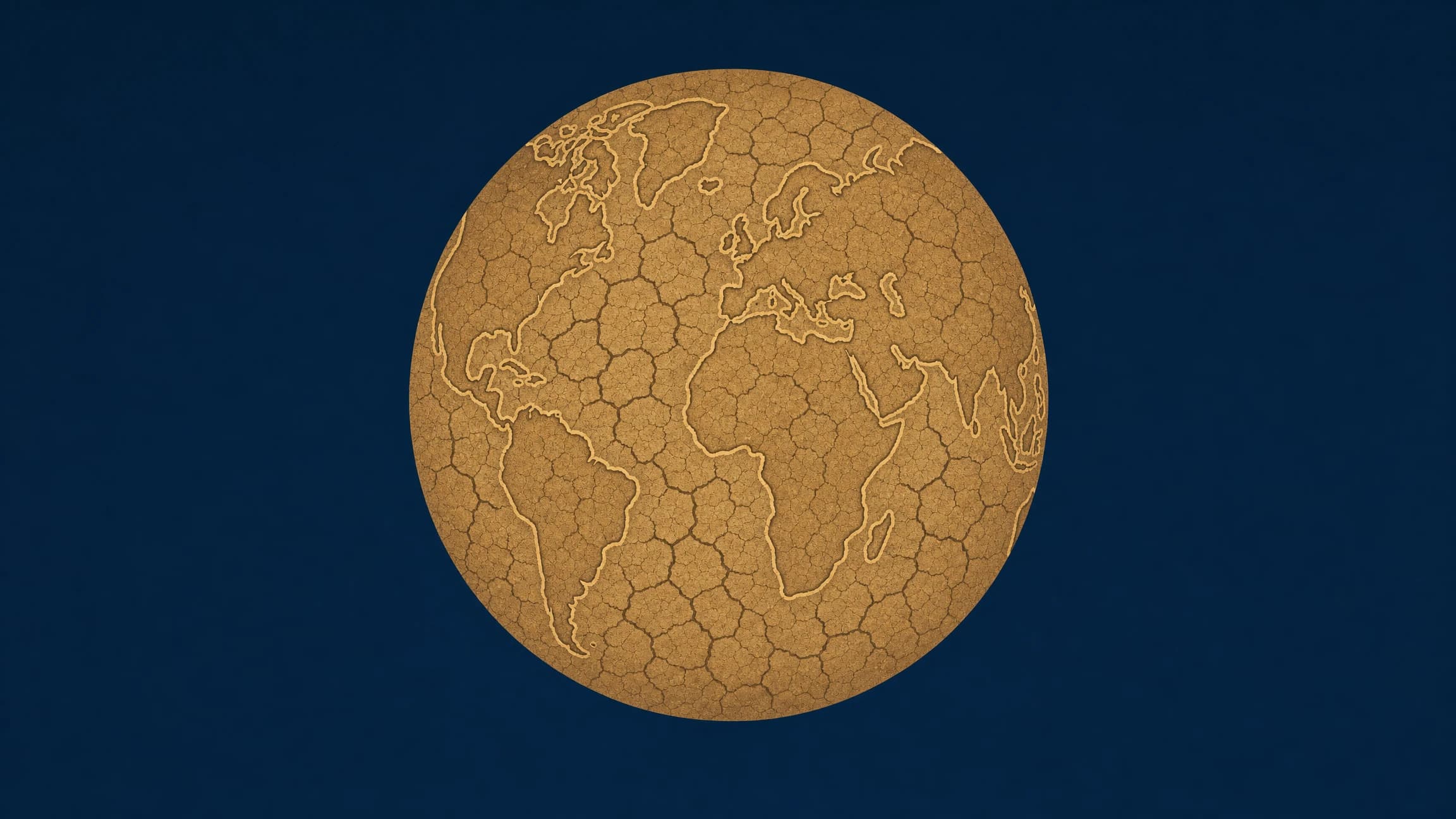
It's easy to picture 'no ocean' as simply more land — continents fused together with a lot of extra beachfront property. The reality is closer to removing the planet's climate control system, its largest oxygen factory, and the habitat of the vast majority of its living organisms, all at once.
The oxygen problem
Most people credit rainforests as Earth's 'lungs,' but marine phytoplankton — microscopic photosynthetic organisms drifting near the ocean surface — are responsible for an estimated 50 to 80% of the oxygen entering Earth's atmosphere, depending on the estimate and methodology used. That range comes from organizations including NOAA and the U.S. National Ocean Service, which describe phytoplankton as producing 'more than half' of the world's oxygen. Removing the ocean removes phytoplankton, and with it, the largest single source of atmospheric oxygen replenishment.
That phytoplankton are major oxygen producers is well established in marine science; the precise percentage varies by source and methodology (estimates commonly range from roughly 50% to over 70%), which is why this article presents it as a range rather than a single fixed figure.
Climate regulation would collapse
Water has an unusually high heat capacity — it takes far more energy to change its temperature than it takes to change the temperature of rock, soil, or air. This is why coastal cities have milder, more stable climates than inland regions at the same latitude. Oceans also drive massive heat-transport systems like the Gulf Stream, which moves warm water (and warmth) from the tropics toward higher latitudes, moderating temperatures across Europe and eastern North America. Without oceans, land would heat and cool far more rapidly and extremely, day to night and season to season, with nothing to buffer the swings.
Where would all that water actually go?
The consequences shift depending on the mechanism assumed. If the water vanished from the universe entirely, Earth would lose roughly 1.335 billion cubic kilometers of water outright, along with the atmospheric moisture the ocean continuously supplies through evaporation — rainfall over land depends heavily on ocean-sourced water vapor, so most land areas would also become far more arid. If instead the water were vaporized into the atmosphere, Earth would face an entirely different problem: a runaway greenhouse effect, since water vapor is itself a potent greenhouse gas, potentially pushing surface temperatures to Venus-like extremes over time.
Which of these two failure modes is 'more likely' is unanswerable, since no natural mechanism plausibly removes an ocean this way. The vaporization scenario draws on real greenhouse-gas physics; the outright-removal scenario is the more common framing in casual discussion. Both are useful for illustrating different consequences, not for predicting a specific outcome.